
Ophthalmic surgery continues to evolve rapidly, offering safer, more precise, and more effective treatment options for patients with vision-impairing conditions. From corneal corrections to lens replacements and retinal interventions, today’s surgical innovations help restore sight, reduce discomfort, and prevent long-term complications.
For medical device developers and researchers, understanding the most common ophthalmology procedures—and the clinical benefits they deliver—provides essential insight for designing and testing technologies that support eye health and surgical success.
This guide outlines the leading ophthalmic surgeries used in clinical practice and highlights how each contributes to improved patient outcomes.
Key Takeaways
- Ophthalmology includes a range of surgical procedures that address the cornea, lens, retina, and surrounding structures.
- Modern techniques emphasize precision, safety, and faster recovery times through advanced devices and imaging.
- Understanding clinical benefits helps guide device innovation and preclinical research needs.
- Preclinical ophthalmic models provide essential validation of safety, performance, and surgical usability.
LASIK and Refractive Laser Surgery
Refractive procedures such as LASIK, PRK, and SMILE are among the most commonly performed eye surgeries worldwide. These procedures reshape the cornea to improve how light focuses on the retina, reducing dependence on glasses or contacts.
Clinical benefits include:
- High success rates and predictable outcomes
- Rapid recovery and minimal patient downtime
- Long-lasting correction for myopia, hyperopia, and astigmatism
- Reduced risk of complications due to femtosecond laser precision
Preclinical testing ensures lasers, microkeratomes, and other refractive tools meet strict safety and performance requirements.
Cataract Surgery and Intraocular Lens (IOL) Implantation
Cataract surgery is the most frequently performed ophthalmic surgery, replacing the clouded natural lens with a clear artificial intraocular lens.
Modern procedures use:
- Phacoemulsification systems
- Femtosecond laser–assisted surgery
- Advanced IOLs (multifocal, toric, extended-depth-of-focus)
Clinical benefits:
- Restoration of clear vision
- Correction of refractive errors
- Improved contrast sensitivity
- High patient satisfaction and rapid visual recovery
Device developers often rely on preclinical studies to validate IOL biocompatibility, mechanical durability, placement accuracy, and long-term stability.
Glaucoma Surgery
Glaucoma procedures aim to reduce intraocular pressure to prevent optic nerve damage. These can be traditional surgeries or minimally invasive glaucoma surgeries (MIGS).
Common procedures include:
- Trabeculectomy
- Tube shunt implantation
- MIGS devices such as stents, shunts, and micro-incisional tools
Clinical benefits:
- Effective long-term pressure reduction
- Lower risk of disease progression
- Minimally invasive options with quicker recovery
- Reduced medication dependence
Preclinical testing helps validate device flow characteristics, placement accuracy, and tissue interactions.
Vitrectomy and Retinal Procedures
Vitrectomy allows surgeons to access the retina to treat conditions such as retinal detachment, diabetic retinopathy, macular holes, and vitreous hemorrhages.
Procedures often involve:
- Micro-incisional instruments
- Illumination systems
- Retinal lasers
- Vitreous cutters
- Endoscopic or microscope-assisted visualization
Clinical benefits:
- Reattachment of the retina and preservation of vision
- Enhanced surgical precision with high-resolution visualization
- Reduced trauma due to small-gauge instruments
- Improved outcomes for complex retinal disorders
Preclinical retinal models help evaluate device ergonomics, illumination quality, and surgical feasibility.
Corneal Transplantation and Keratoplasty
When the cornea becomes damaged or diseased, transplantation procedures restore clarity and structural integrity.
Common procedures:
- Penetrating keratoplasty (PK)
- Endothelial keratoplasty (DMEK, DSAEK)
- Deep anterior lamellar keratoplasty (DALK)
Clinical benefits:
- Significant improvement in visual acuity
- Faster recovery with partial-thickness transplants
- Lower rates of graft rejection in modern techniques
- Restoration of corneal structure and integrity
Preclinical studies support graft handling, device tool evaluation, and model training for surgical precision.
Strengthening Ophthalmic Innovation With IBEX
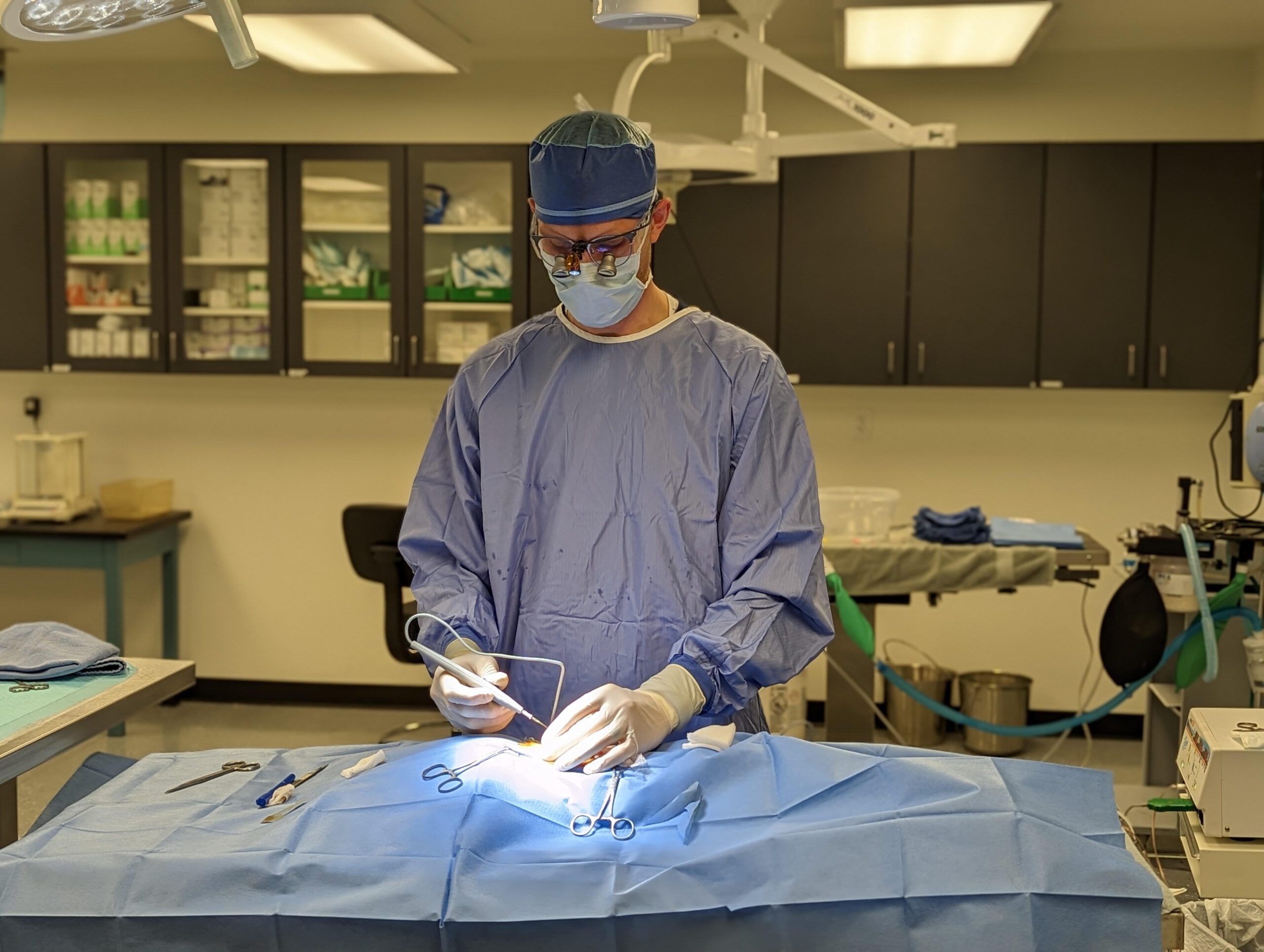
Ophthalmic devices require meticulous testing to ensure safety, precision, and performance. At IBEX, we provide advanced preclinical ophthalmology models and expert surgical teams to support companies developing lasers, IOLs, MIGS devices, retinal systems, and other ophthalmic technologies.
From early feasibility to comprehensive preclinical evaluations, our team ensures each study is conducted with accuracy, care, and regulatory alignment.