
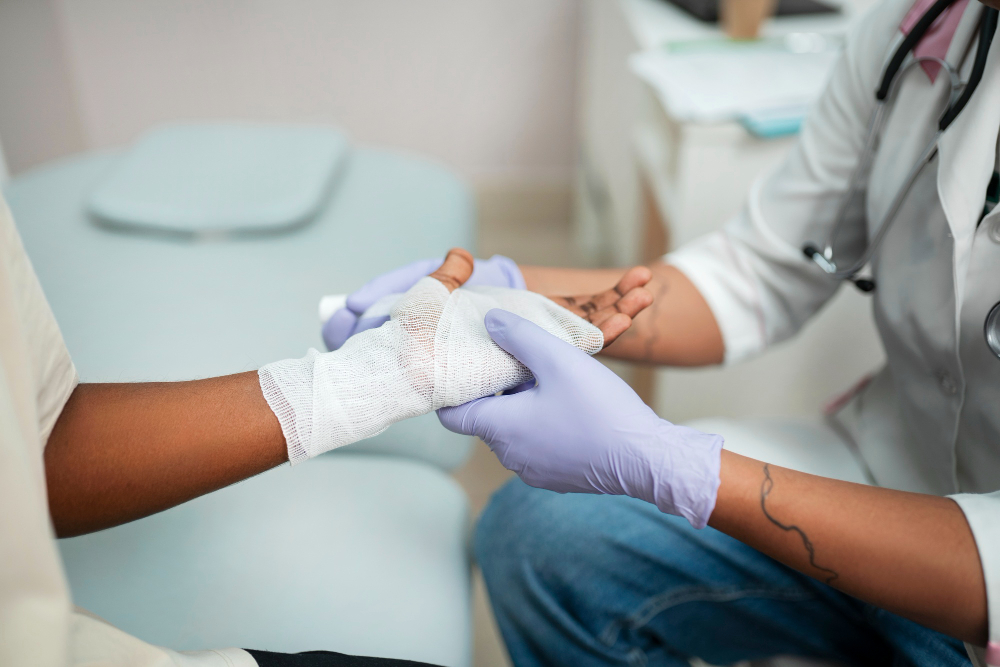
The human body possesses a remarkable ability to heal itself, and nowhere is this more evident than in the skin. As the body’s largest organ, the skin provides a vital barrier against environmental threats while also maintaining hydration and temperature balance.
When the skin is damaged—whether by injury, surgery, or disease—a highly coordinated biological process begins to restore its structure and function.
This guide explores the science behind skin repair, detailing each phase of the wound healing process and the key biological mechanisms that allow the body to recover.
Key Takeaways
- Wound healing is a multi-phase biological process involving inflammation, tissue formation, and remodeling.
- Proper skin repair relies on the interaction of cells, growth factors, and extracellular matrix components.
- Understanding each stage of healing helps improve treatment strategies and wound care technologies.
Core Phases of Wound Healing
1. Hemostasis – Stopping the Bleeding
The healing process begins immediately after injury. Blood vessels constrict to reduce bleeding, and platelets aggregate at the wound site to form a clot. This clot not only stops blood loss but also releases signaling molecules that trigger inflammation and recruit immune cells.
2. Inflammation – Cleaning and Defense
Within hours, white blood cells (primarily neutrophils and macrophages) arrive to remove debris, pathogens, and dead tissue. This stage prepares the wound bed for new tissue growth.
While inflammation may cause redness and swelling, it is a crucial part of the body’s defense and repair response.
3. Proliferation – Building New Tissue
Once the wound is cleared, fibroblasts begin producing collagen, the protein framework that supports new tissue. Simultaneously, angiogenesis (the formation of new blood vessels) restores oxygen and nutrients to the area.
Keratinocytes, the primary skin cells, migrate across the wound to form a new epithelial layer. This stage is when granulation tissue gives the wound its pink, healing appearance.
4. Remodeling (Maturation) – Strengthening the Skin
In the final phase, collagen fibers reorganize and strengthen, while excess cells are removed. The newly formed skin may appear different in color or texture but gradually regains flexibility and resilience.
Complete remodeling can take weeks to months, depending on the wound’s size, depth, and location.
Cellular and Molecular Mechanisms of Skin Repair
- Growth Factors such as VEGF, PDGF, and TGF-β coordinate cell activity and tissue regeneration.
- Extracellular Matrix (ECM) Remodeling ensures that new tissue develops proper structure and strength.
- Cell Signaling Pathways regulate communication between immune cells, fibroblasts, and keratinocytes to balance inflammation and repair.
These complex interactions ensure wounds close effectively and the skin regains its barrier function.
Factors That Influence the Healing Process
Successful wound healing depends on both internal and external factors, including:
- Age and Overall Health: Slower healing in older adults or those with chronic illnesses.
- Infection and Inflammation: Bacterial contamination can delay or prevent closure.
- Circulation: Adequate blood flow delivers oxygen and nutrients essential for tissue repair.
- Nutrition: Proteins, vitamins (especially C and A), and minerals like zinc are vital for collagen synthesis.
- Environment: Moisture, oxygen levels, and wound care practices affect recovery speed.
Understanding these factors helps clinicians and researchers develop targeted therapies that promote optimal skin repair.
Advancing Skin Repair Research With IBEX
IBEX provides comprehensive preclinical research services to support the development of innovative wound healing therapies and skin repair technologies. Our team of expert scientists and surgeons conducts GLP-compliant studies using advanced imaging, histological analysis, and in vivo models to evaluate safety, efficacy, and tissue regeneration outcomes.
Partner with IBEX to accelerate your wound healing research and bring advanced skin repair solutions to patients faster.