
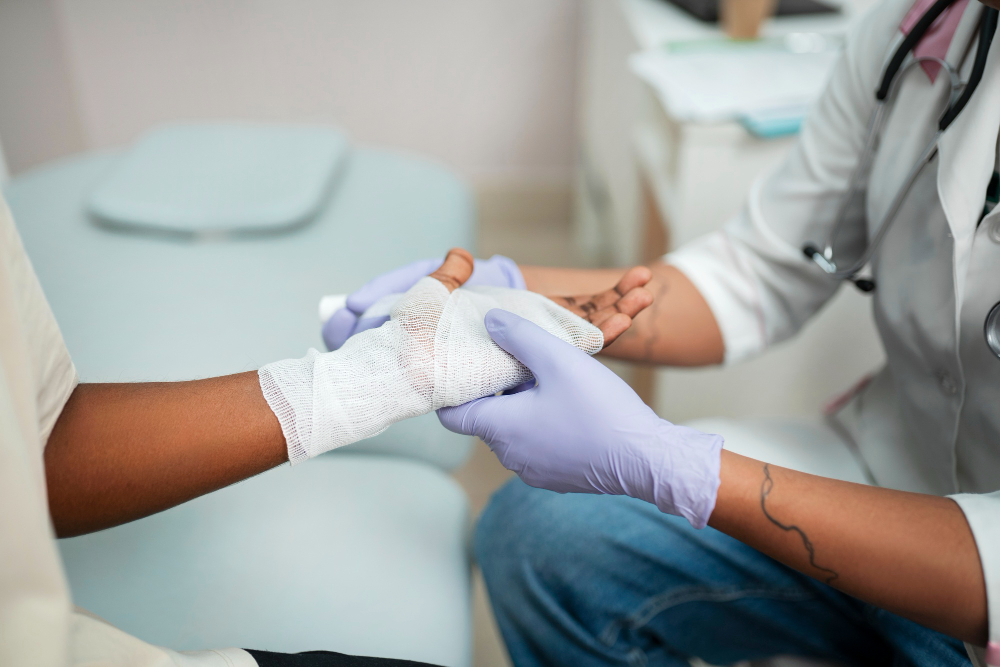
Wound healing is a complex and dynamic biological process that restores the integrity of the skin and underlying tissues after injury. Whether it’s a small paper cut or a deep surgical incision, the body activates a remarkable series of coordinated steps to repair the damage.
In this post, we’ll take you through the process of wound healing so you can understand how the body maintains homeostasis and how proper care can support recovery.
Key Takeaways
- Wound healing occurs in four distinct phases: hemostasis, inflammation, proliferation, and maturation.
- All phases of wound healing play a critical role in repairing tissue and restoring skin integrity.
- Healing outcomes can be influenced by nutrition, circulation, underlying health conditions, and wound care practices.
Table of Contents
1. Hemostasis – Stopping the Bleeding
Timeline: Immediate (Seconds to Minutes)
The first stage of wound healing begins immediately after injury. The goal of hemostasis is to stop the bleeding and form a temporary barrier over the wound.
- Vasoconstriction — Blood vessels constrict to minimize blood loss.
- Platelet Plug Formation — Platelets (a type of blood cell) stick to the damaged site and to each other, forming a plug.
- Coagulation Cascade — A biochemical reaction triggers the conversion of fibrinogen into fibrin, creating a mesh that strengthens the clot.
This phase is crucial because it prevents excessive blood loss and creates the initial foundation for the healing process.
2. Inflammation – Cleaning the Wound
Timeline: First 1–4 Days
Inflammation is the body’s natural defense mechanism, removing pathogens, debris, and damaged tissue.
- Vasodilation — Blood vessels widen, allowing immune cells to reach the site.
- Immune Response — White blood cells, especially neutrophils and macrophages, flood the wound to destroy bacteria and clean up cellular debris.
- Redness, Swelling, Heat, Pain — These classic signs of inflammation are part of the body’s healing effort, although they can be uncomfortable.
While this phase may appear problematic, it’s an essential step in creating a safe environment for new tissue growth.
3. Proliferation – Building New Tissue
Timeline: 4–24 Days Post-Injury
The proliferation phase is where the wound begins to rebuild with new tissue.
- Fibroblast Activity — Fibroblasts produce collagen and extracellular matrix, giving the wound strength and structure.
- Angiogenesis: New blood vessels form to supply nutrients and oxygen to the healing tissue.
- Granulation Tissue Formation — A pink/red, bumpy tissue that indicates healthy healing.
- Re-epithelialization — Skin cells (keratinocytes) migrate across the wound to close the surface.
The wound appears smaller, more organized, and begins to regain function and structure during this phase.
4. Maturation (Remodeling) – Strengthening the Tissue
Timeline: 21 Days to Several Months (Even Up to a Year)
Maturation is the final phase of healing, where the newly formed tissue is remodeled and strengthened.
- Collagen Remodeling —Type III collagen is replaced by the stronger type I collagen, increasing tensile strength.
- Scar Formation — While the skin rarely returns to its original strength, the wound achieves up to 80% of its pre-injury strength.
- Capillary Reduction — As the tissue matures, excess capillaries formed during angiogenesis fade away.
This phase can continue long after the wound appears to be healed externally.
Factors Affecting Wound Healing
Several factors can impact the efficiency and success of the wound healing process:
- Positive Influences:
- Proper nutrition (vitamin C, protein, zinc)
- Good hygiene and wound care
- Adequate blood flow and oxygenation
- Negative Influences:
- Smoking and alcohol use
- Chronic conditions (e.g., diabetes, poor circulation)
- Infection or repeated trauma to the wound site
When to Seek Medical Attention
While most minor wounds heal naturally, certain signs indicate the need for medical intervention:
- Persistent redness or swelling
- Foul-smelling drainage or pus
- Fever or chills
- Increased pain
- A wound that doesn’t heal within a reasonable timeframe
Prompt care can prevent complications like infections, delayed healing, or scarring.
Partner With IBEX for Superior Wound Healing Preclinical Research
Partner with IBEX to accelerate your wound healing innovations. Our comprehensive preclinical research ensures rigorous testing, reliable data, and proven pathways to clinical success.
With us, you’re guaranteed precise, science-driven insights to support the development of safe and effective wound healing therapies. Contact us today to explore more on wound healing preclinical research with IBEX.